
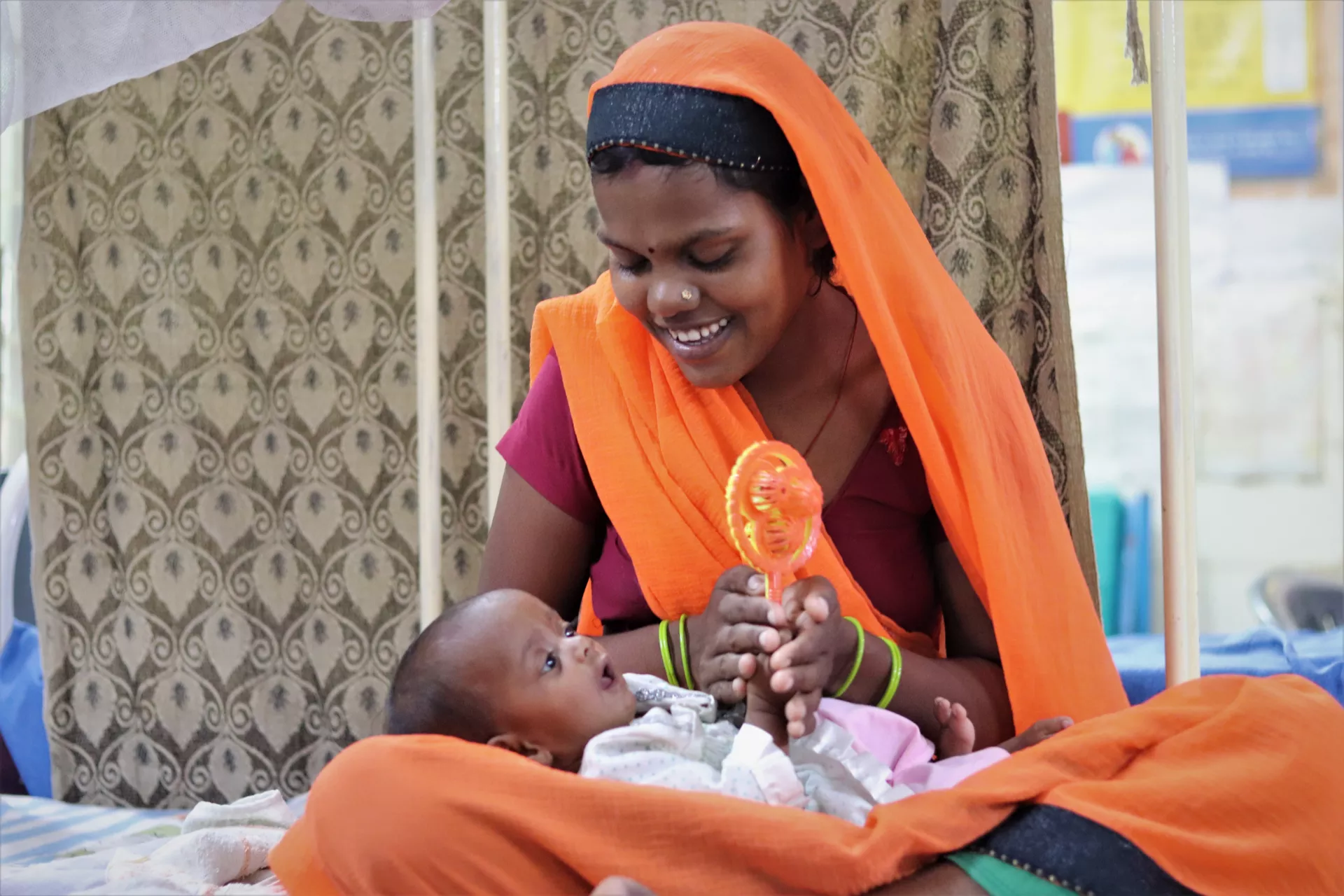
The first 1,000 days, which is from conception to a child’s second birthday, is the most powerful period of human development. In this short span, nearly 80% of the brain develops, millions of neural connections form every second, immunity strengthens, and foundations for learning, health, emotional resilience and later productivity are laid. What a child receives or is denied during this period determines lifelong well-being.
Globally, 43% of children in low- and middle-income countries risk not reaching their developmental potential (Lancet, 2016). India has progressed in reducing child mortality over the past few decades, but survival alone is no longer a benchmark. Children need to thrive and thrive well. For India, investing in these early years is not just a social imperative, but a strategic economic priority. As economist James Heckman’s research shows that every dollar invested in early childhood yields 6–17 dollars in long-term returns.
India’s Situation
- Nutrition & healthcare: Foundations still fragile
A child’s journey in the first 1,000 days begins with maternal health. Yet 52% of India’s pregnant women are anaemic (NFHS-5) which increases the risk of low birthweight, preterm birth, and developmental delays.
Complementary feeding remains a deep concern. NFHS-5 reveals:
- Only 11.3% of children aged 6–23 months receive an adequate diet.
- 35.5% are stunted.
- 19.3% are wasted.
- 32.1% are underweight.
Immunization coverage has expanded, yet the National Family Health Survey (NFHS-5, 2019–21 shows that of children aged 12–23 months, nearly one in four still do not receive all basic vaccines.
These are not failures of children or families-they reflect systemic gaps. Unless maternal counseling, growth monitoring, and early health services improve, India risks undermining the foundations of human capital.
- Early stimulation & nurturing care: The missing half of caregiving
Nutrition helps children survive, but nurturing care helps them thrive. Between birth and age two, a child’s brain forms over one million neural connections per second (Harvard Center on the Developing Child). These connections are strengthened by everyday interactions like talking, singing, reading, responsive caregiving, and playful engagement.
Yet early stimulation remains one of India’s most neglected domains.
The India Early Childhood Development Country Profile (WHO–UNICEF–World Bank, 2024) highlights that India has no nationally representative data on:
- parent–child interaction,
- early learning activities in the home,
- availability of children’s books or play materials,
- responsive caregiving.
This is not a mere data gap, it is a policy blind spot. India still treats early learning as beginning at age three, not at birth. Till policy makers don’t understand how India is missing this invaluable cog in the wheel of its development engine, there will continue to be no data. The resource starved infant toady will be a resource capped adult tomorrow.
- Toxic stress & early adversity: The silent crisis
Millions of infants grow up facing chronic adversity like poverty, food insecurity, unsafe housing, domestic conflict, abuse and violent discipline. When such adversities accumulate without protective adult support, they create toxic stress, which disrupts brain development.
According to the Center on the Developing Child, Harvard University, prolonged toxic stress can:
- weaken learning and memory pathways,
- impair executive function,
- increase behavioural difficulties,
- elevate the risk of chronic disease.
These are complex issues rooted in cultural beliefs and historic deprivations, but powerful forces that erodes India’s demographic dividend long before a child enters preschool.
- Early detection & inclusion: Catch early or lose potential
India has 11.5 million children under five with developmental disabilities (UNICEF, 2020)-the highest number globally. Many conditions are detectable in infancy, yet most children are identified late, after age five, when positive effects of intervention drop sharply.
Important steps have been taken:
- Rashtriya Bal Swasthya Karyakram (RBSK) screens for developmental delays.
- The Divyang Protocol (2023) strengthens disability inclusion in Anganwadi services. Anganwadi workers are now being trained in the Disability Screening Schedule (DSS) (disability data awaited).
However, screening quality varies widely, referral pathways remain unclear, and early intervention centres and therapists are too few. Families face stigma, confusion, and financial barriers. Early detection and timely intervention can transform outcomes-helping children grow into independent, productive citizens.
- Service gaps faced by the urban poor families
Urban slums remain some of the hardest places for infants to access essential services. The UNICEF Urban Poor Report shows significantly lower ICDS coverage, weaker feeding and immunisation, and frequent exclusion of migrant families. The NUHM Framework highlights inadequate health infrastructure, weak slum outreach, and poor coordination across services. Long work hours, unsafe environments, and distant or non-functional Anganwadis further limit care. Without urban-specific redesign, many of India’s youngest children will remain unseen.
Conclusion: India’s future will be decided in the first 1,000 days
India stands at a pivotal moment. Millions of India’s very young children continue to grow up with unmet nutritional, emotional, and developmental needs. The earliest years remain overlooked at the policy roundtables perhaps due to lack of knowledge, or worse, a reluctance to fully acknowledge their transformative power, which is compounded by uneven implementation of services within this period. The cost of inaction is enormous. If India is determined to harness its demographic dividend, the first 1,000 days must move from the margins of policy conversation to the centre of national planning.
References
- Center on the Developing Child at Harvard University. (2015). Toxic stress. Harvard University. https://developingchild.harvard.edu/science/key-concepts/toxic-stress/
- Heckman, J. J. (2012). The case for investing in disadvantaged young children. Economics of Human Biology, 14, 1–17.
- IIPS & ICF. (2021). National Family Health Survey (NFHS-5), 2019–21: India report. Ministry of Health & Family Welfare.
- Lancet Early Childhood Development Series Steering Committee. (2016). Advancing early childhood development: From science to scale. The Lancet.
- Ministry of Health & Family Welfare. (2013). National Urban Health Mission (NUHM): Framework for implementation.
- UNICEF. (2020). Children with disabilities: Global estimates.
- UNICEF India. (2018). The urban poor in India: A profile.
- WHO, UNICEF, & World Bank. (2024). India: Early Childhood Development Country Profile (2024).
About the Author
Prof. (Dr.) Geeta Chopra is one of India’s leading voices in Early Childhood Development, disability inclusion, parenting, and child protection. She founded the EveryChild EveryAbility (ECEA) Institute after retiring as Professor from the University of Delhi. Website: www.drgeetachopra.com